Teleological Theory Of Ethics . Section 3 discusses attempts to downgrade tp5, moving from essential to merely characteristic properties. To understand the dimensions of ethics, we need to first understand the branches of ethics. Deontological ethics 3.2 from www.slideshare.net A study in moral theory is a book on moral philosophy by the philosopher alasdair macintyre. In this article, i am going to analyse the key sociological perspective of marxism and the marxist theory of poverty based on class. To understand the dimensions of ethics, we need to first understand the branches of ethics.
Explain The Lock And Key Theory Of Enzyme Action. Enzyme substrate complex (es) = enzyme (e) + product (p). Following are several statements concerning enzyme and substrate interaction.
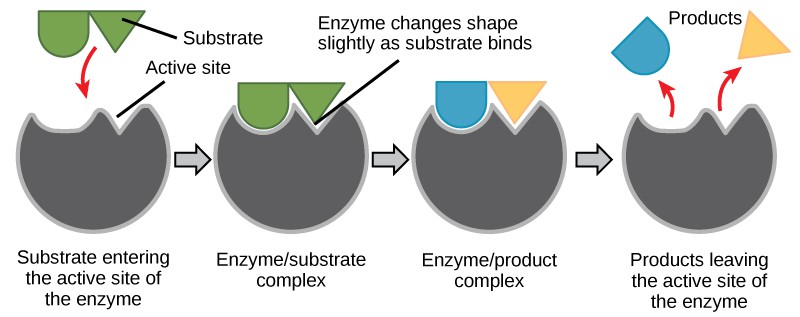
Energy and Metabolism Concepts of Biology from opentextbc.ca
Enzyme substrate complex (es) = enzyme (e) + product (p). During this process, the enzyme is acting as the lock and has a section called the active site which is where the reaction will take place, and the substrate, for instance a protein, is the key. The products do not fit in the active site, leave the active site for another substrate.
In This Analogy, The Lock Is The Enzyme And The Key Is The Substrate.
The molecules on which the enzymes act are known as substrates of enzymes. In the lock and key model, the shape of the active site exactly matches the shape of the substrate. So just like a key, this specific shape would be the only one that could open the lock.
This Experiment Fails To Explain The Broad Specificity Of An Enzyme.
This model supports that an active site is a rigid structure. When the enzyme locates its appropriate substrate, the substrate enters the receptor site and both the enzyme and substrate transform to create a complete union so the chemical reaction can occur. When it comes to enzymes, this specific shape of of substrate could be.
In This Analogy The Lock Is The Enzyme And The Key Is The Substrate.
According to this model, the substrate molecule fits in the enzyme active site like a key fits in a lock. This modified lock and key model, known as the induced fit theory, also explains why some substrates, known as inhibitors, fit in the enzyme site but. In the example below, the enzyme splits one molecule into two.
This Model Assumes That Enzyme And Substrate Have Mutual Complementary Structure In Their Free State And Are Rigid Molecules.
The lock and key model refers to an analogy used to describe the specific action of an enzyme with a substrate. And therefore the enzyme cannot parked on it. The lock and key model has many loopholes like:
This Is Called As Lock And Key Hypothesis.
Only the correctly sized key (substrate) fits into the key hole (active site) of the lock (enzyme). The lock and key model could not give any information about the mechanism of enzyme catalysis or product formation. These enzyme molecules can only be opened with the help of specific substrate complexes.


Comments
Post a Comment